

Will the 2026 Australian Open end with another Cinderella story?
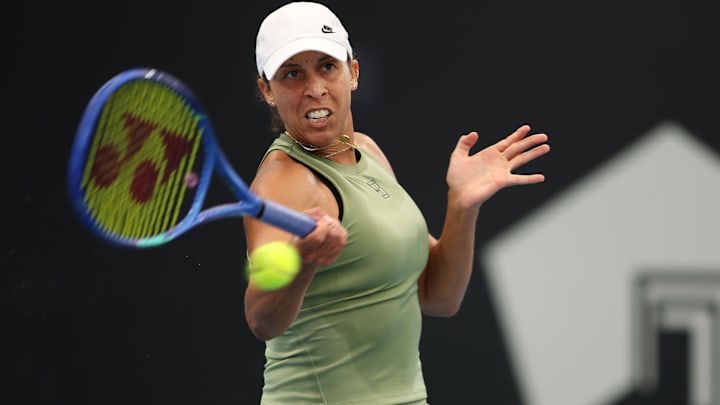
Last year, Madison Keys became the latest in a recent string of unexpected women’s champions Down Under. Just eight players seeded No. 7 or worse have won the Australian title since seeding began in 1924. Six of those eight low-seeded champions have been since 2001.
As the first major of 2026 gets underway this week in Melbourne, meet the five most unexpected women’s champions in Australian Open history.
The most surprising Australian Open women’s champions
Honorable mention: Surprises who weren’t surprises
Serena Williams was No. 81 in the world due to injuries and inactivity when the 2007 Australian Open got underway. Williams even lost in the first round of a pre-Australian Open warmup tournament. However, once Williams arrived in Melbourne, she played her way into championship form to win the event for the third time – to the surprise of a few.
The No. 7 seed was a lucky number for two legends to claim “surprise” Australian titles. Twenty-four-time major winner Margaret Court – then Margaret Smith – was the No. 7 seed when she won her first Australian title in 1960. Williams was the No. 7 seed when she won in Melbourne in 2005. They are technically tied for the sixth-worst seeds to win Down Under.
#5 – Angelique Kerber (2016)
On paper, this result doesn’t seem like it belongs on a list of surprise winners. After all, this was the first of two majors Kerber won in 2016 on her way to finishing as year-end No. 1.
However, no one, except perhaps Kerber herself, saw this coming at the time. Kerber entered the 2016 Australian Open as the No. 7 seed. At the time, only five players seeded No. 7 or worse had won the Australian title (and as you learned in the last section, three of those winners weren’t really underdogs). Kerber had never reached a major final.
In fact, she didn’t get past the third round at any major in 2015.
A rash of upsets left Kerber as the best seed remaining in the bottom half of the draw by the fourth round, but few saw Kerber as a title threat. After all, Kerber barely got out of the first round herself. She had to save a match point against Masaki Doi just to reach the round of 64.
Kerber didn’t lose another set en route to the championship match, but was a decided underdog entering the final. Her opponent? Serena Williams, the top seed who won three of four majors in 2015 and lost just 26 total games at the 2016 Australian entering the final.
Kerber seized her opportunity. Kerber was on top of her game, and Williams was below her usual standard with 46 unforced errors and just six aces. It took three sets, but Kerber pulled the upset.
#4 – Jennifer Capriati (2001)
This was both a Cinderella story and a redemption story.
Capriati was a fixture in the top 10 in the early 1990s as a teenager, when she broke all kinds of records as the youngest player to accomplish various milestones. However, she left the tour for a few years by the mid-1990s due to burnout and various personal issues. When the 2001 tennis season began, she was 24 and hadn’t been a top 10 performer for eight years.
Capriati was also happier and healthier than she had been in years in 2001, and she fulfilled the promise she showed as a teen. In the quarterfinals, she handed Monica Seles just her second-ever Australian Open loss. She then took out No. 2 seed and defending champion Lindsay Davenport and No. 1 seed Martina Hingis back-to-back in straight sets to claim her first major title.
Capriati lifted the Daphne Akhurst Memorial Cup as the No. 12 seed. At the time, she was the only double-digit seed to win the Australian Open women’s title.
#3 – Sofia Kenin (2020)
In retrospect, this was perfect timing for a surprise result.
Kenin beat an impressive list of names to win the 2020 Australian Open. Her last four wins, in succession, were against Coco Gauff, Ons Jabeur, Ash Barty, and Garbine Muguruza. Those players have combined for 7 major titles in 12 Grand Slam final appearances.
In 2020, however, Gauff was a bit too young, Jabeur was a bit too inexperienced in the second week of majors, Barty was a bit too nervous to win her home country’s Slam as the favorite, and Muguruza was a bit past her prime.
Kenin, meanwhile, was destined to play the best tennis of her life in 2020. She played in two of the three major finals in that COVID-affected year.
It all added up to Kenin winning the event as the No. 14 seed – at the time, just the second double-digit seed to win the title in Australia. Kenin beat Barty in the semifinals despite facing set points in both sets. She then rallied past Muguruza in three sets in the final.
#2 – Madison Keys (2025)
Many observers long believed Keys possessed the game to win a Slam. However, when the 2025 Australian Open got underway, most of those same observers believed Keys’ best chances to win a major had come and gone.
Keys entered the 2025 event as the No. 19 seed. At age 29, she was eight years removed from her only other major final appearance.
There were signs that Keys could contend. Keys was poised for a run to the late stages of Wimbledon in 2024 before being forced to retire due to injury in the fourth round. She won the 2025 Australian tune-up event in Adelaide.
Not only did Keys capture her first major championship, but she did so by navigating one of the most difficult title paths imaginable. Five of her seven matches went three sets, including her last four. She survived a match point against No. 2 seed Iga Swiatek in the semifinal.
She outlasted No. 1 seed Aryna Sabalenka in an epic final to become the first player since Serena in 2005 to beat the top two seeds to win the Australian title.
There have been several surprise winners in recent years, but Keys at No. 19 is the worst seed to win Down Under in the 2000s.
#1 – Chris O’Neil (1978)
How unknown was O’Neil when she won the 1978 Australian title? Her name was spelled incorrectly (O’Neill instead of O’Neil) on the stadium scoreboard in the final, even though she was playing in her own country.
O’Neil entered the 1978 Australian Open unseeded and ranked No. 111 in the world, but she took zero “L’s” – in any set or match – en route to her first and only career singles title.
Yes, the Australian field was depleted in the late 1970s. Not a single player in the WTA’s year-end top 10 for 1978 showed up for this Australian Open, and there were just 32 total players in the draw. Even so, O’Neil’s triumph defied the odds. Think of it like a player outside the top 100 winning a WTA 250 title on the modern tour.
O’Neil picked up five of her 19 career tour-level singles wins at that 1978 Australian Open. She lost in the first or second round in 21 of her 22 other career Grand Slam appearances.
In addition to being the lowest-ranked player to win the Australian Open, O’Neil, for years, was known as the last Aussie to win her home country’s Grand Slam until Ash Barty won the event in 2022.
 Add us as a preferred source on Google